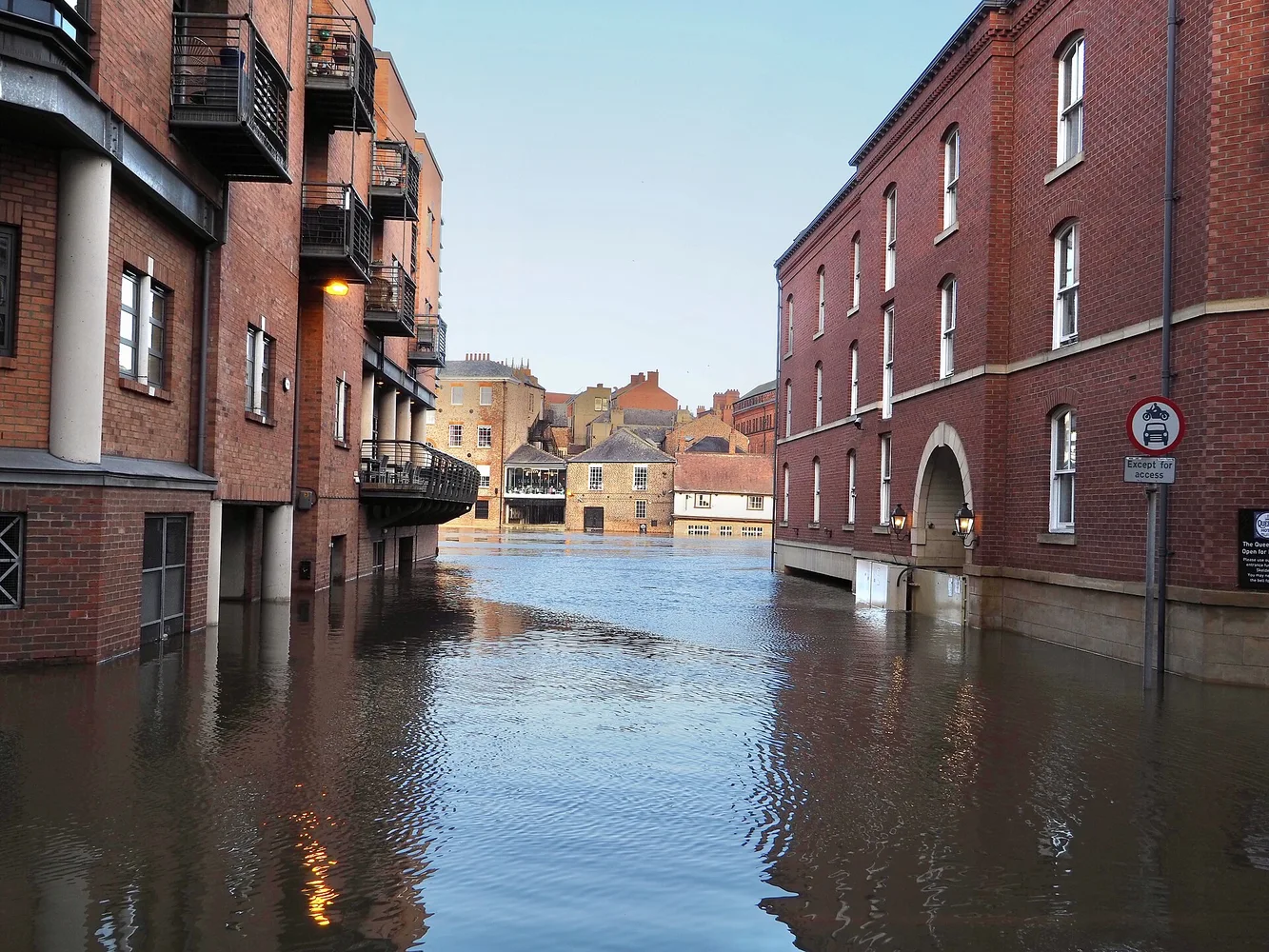
Flood risk is often discussed as though it were one thing. Environment Agency guidance distinguishes sources including rivers and the sea, surface water and groundwater. These routes can behave differently and can interact in the same place.
Surface-water flooding can occur when rainfall cannot drain away quickly enough. Groundwater flooding concerns water below the ground rising to the surface. Distance from a visible river therefore does not answer every question about a location’s potential exposure.
A map needs a question
The Environment Agency’s guidance on surface-water maps explains their purpose and limits. A map describing long-term risk is not the same as a forecast of exactly what will happen today, and a broad mapped category is not a complete investigation of an individual property.
Check which source of flooding a map covers, the area and assumptions represented, and whether it describes present or future conditions. The GOV.UK guidance linked here applies to England. Other UK nations have their own services and institutional arrangements; an England-only map should not be presented as a UK-wide answer.
Use live information for live decisions
For immediate conditions, consult current official warnings and follow the advice of the relevant authorities. For longer-term questions, use the appropriate official risk information and seek location-specific clarification when needed. This article explains the categories; it does not assess a property or recommend a course of action during an incident. Naming the type of water is the first step towards asking the right question.
Follow the sources
Reference material consulted for this explainer. External publishers are not affiliated with or endorsing Factlore.
- Environment Agency — Understanding and using the surface-water flood map ↗
- Environment Agency — Groundwater flooding ↗
Source material consulted 14 November 2026.
A question to take away
When you see a flood-risk map, can you identify what type of flooding it actually describes?