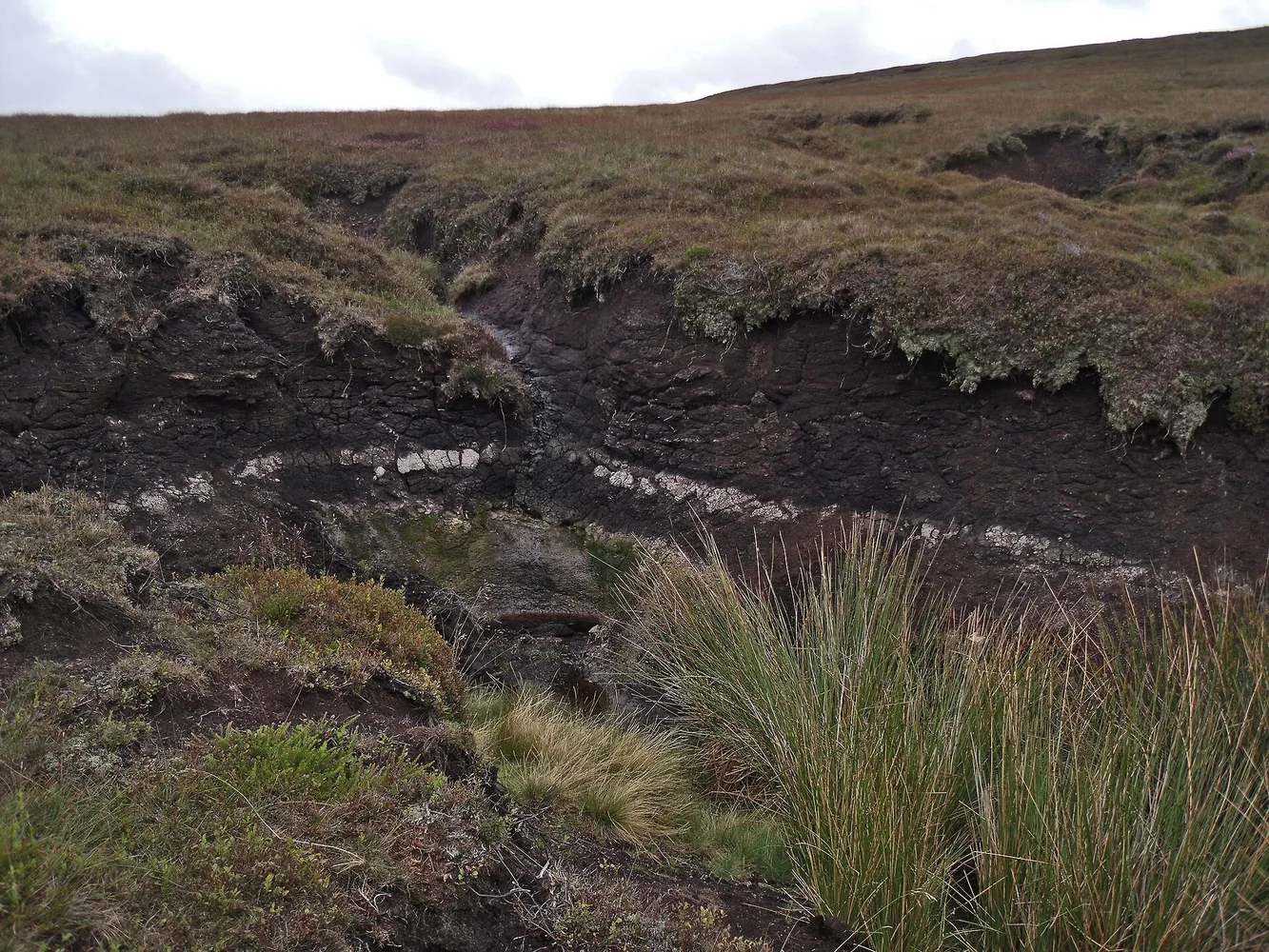
Peat forms where partly decomposed organic material accumulates under conditions that slow its breakdown. The IUCN UK Peatland Programme describes a range of peatland habitats, including bogs and fens with different water supplies.
The landscape may look quiet, but the water regime is fundamental to its behaviour. Peatlands can hold carbon and support distinctive habitats, while peat itself can preserve evidence about past environments and human activity. Seeing the surface is only the beginning of understanding the system.
Condition matters as much as area
An intact wet peatland and a drained or eroding peatland should not be treated as if they perform identically. The IUCN programme’s restoration guidance emphasises the need to understand local conditions, including hydrology and the characteristics of the site.
Restoration is therefore not simply a matter of declaring land protected. It involves identifying the causes of damage, selecting appropriate interventions and monitoring the outcome. A claim about a project’s benefits should explain the site’s starting condition and the evidence used to assess change.
Read the claim behind the landscape
When a story links peatlands to climate or water management, check whether it concerns a general ecosystem function or a measured result at a particular site. Those are different levels of claim. Meaningful evidence describes the place, the method and the timescale. Britain’s peatlands deserve attention not because every benefit is automatic, but because their condition connects landscapes, biodiversity and long-term environmental processes.
Follow the sources
Reference material consulted for this explainer. External publishers are not affiliated with or endorsing Factlore.
Source material consulted 14 November 2026.
A question to take away
What would make a peatland restoration claim convincing to you?