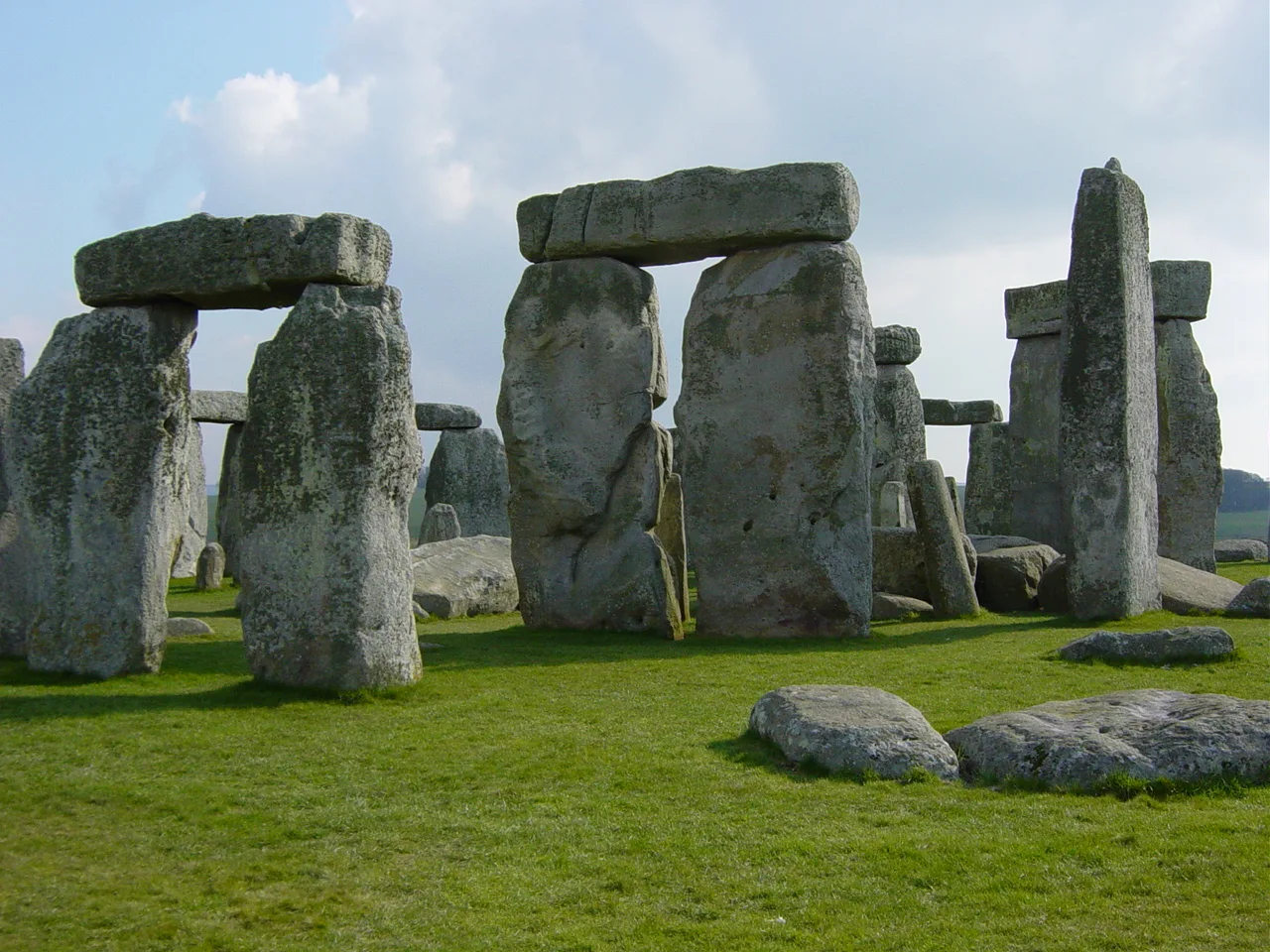
Stonehenge was not created in a single moment. English Heritage describes a monument and surrounding landscape shaped through different stages of prehistoric activity. Treating it as one finished object with one simple purpose can hide that development.
The stones and archaeology provide evidence, but the people who built the monument did not leave a written explanation that settles all our questions. Interpretations therefore depend on the remains, their context and comparisons with other sites. Some conclusions are stronger than others.
The sun is part of the evidence
English Heritage explains the monument’s relationship with the solstices. The arrangement of the stones and the direction of the sun at particular times of year are observable features. Their significance can be investigated without assuming that every modern story about the site is correct.
An alignment is not a complete description of belief or ceremony. It can support an interpretation while leaving open questions about who gathered, what they did and how meanings changed. The distinction between evidence and a full reconstruction is especially important at a site surrounded by so many theories.
Leave room for a real question
A useful account should tell readers which features are measured, which activities are supported by archaeology and which details remain proposals. Reconstructed scenes can make the past easier to imagine, but they should not silently become documentary photographs in the reader’s mind. Stonehenge is no less remarkable when uncertainty is visible; it is more interesting because the questions remain grounded in a physical place.
Follow the sources
Reference material consulted for this explainer. External publishers are not affiliated with or endorsing Factlore.
Source material consulted 14 November 2026.
A question to take away
How should a museum or website distinguish a reconstruction from something directly supported by evidence?